Future of Inspections?
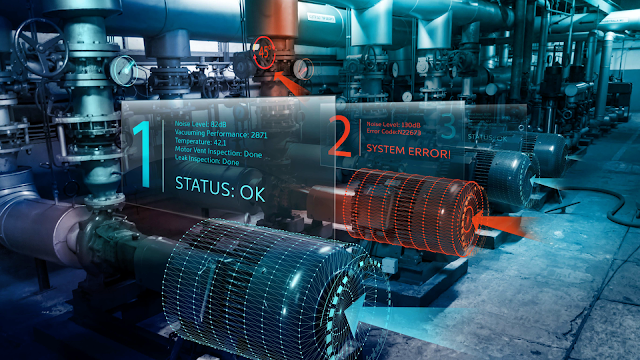
How will technology solutions impact the way inspections are performed in the future?
Inspections have changed over time, and they continue to change with advances in technology.
Here’s a simple introduction to some of the most important emerging technologies in the industry.
- Internet of Things (IoT)
- Analytics and Big Data
- Drones
- Virtual Reality (VR) and Augmented Reality (AR)
- Artificial Intelligence (AI)
- Machine Learning
Internet of Things (IoT)
IoT is a giant network of physical devices (things) that are connected to the internet. These devices collect and exchange data using sensors, essentially making them into “live objects”, allowing for continuous and real-time monitoring of assets. Typically, physical conditions such as location, temperature, pressure, humidity, leaks, etc. are measured.
Analytics and Big Data
Studies show that companies that are data-driven perform better financially and operationally. When you are able to measure, you are empowered to know more about your business and make informed, rational decisions that lead to better performance.
There are two main types of analytics for inspections: portfolio and predictive.
- Portfolio analytics track equipment, location and value of the asset.
- Predictive analytics help forecast the future needs of a building’s equipment.
What’s the difference between analytics and big data? Big data is similar to analytics but there’s much more of it. Big data is voluminous, comes from diverse sources, and requires large amounts of storage, memory, processing, and bandwidth, etc. The challenge with big data is the industry doesn’t know what to do with all that information yet or how to turn it into useful insights.
Drones
Drones may be referred to as unmanned aerial vehicles (UAVs), remotely piloted aircraft systems (RPAS), or advanced air mobility (AAM).
They are small aircrafts that operate without a human pilot on board.
They are controlled remotely by an operator or autonomously using sensors and pre-programmed flight paths.
There’s been some interesting use cases already with Amazon testing drones for package delivery; Domino’s delivering a pizza via drone, not-for-profit organizations using drones to deliver survival supplies and medicine in hazardous areas, and regional police forces using drones as first responders to gain critical information about a scene before officers arrive.
Virtual Reality and Augmented Reality
There’s virtual reality and augmented reality – most people think they are the same thing but they're not.
Virtual reality creates a fully immersive, virtual world that users can interact with through the use of equipment such as goggles or helmets / VR headsets. It’s an immersive world that cannot interact with the users’ surroundings. This type of technology has been popular with gaming and training.
Augmented reality, or mixed reality, blends real life and virtual reality in that it overlays digital information onto the real world, usually through phones, tablets, or specialized glasses. Users are able to interact with virtual components and physical real-world components at the same time.
Artificial Intelligence (AI)
AI uses large amounts of data and algorithms for computers to analyze data, identify trends, provide recommendations, and make decisions…tasks that are typically performed by humans or require human intelligence.
Machine Learning
Machine learning is a sub-set of artificial intelligence that improves as it receives more data - especially clean, validated data.
Machine learning enables computers to learn patterns from large datasets and make predictions or decisions without being specifically programmed for that particular task.
Emerging technologies are rapidly expanding the range of practical tools available for industry use.
While many of these technologies have shown promising results in research and early deployments, the pace and extent of their adoption by the industry remains uncertain.
Factors such as technological maturity and accuracy, regulatory requirements, implementation costs, and workforce readiness, will influence when, how, and if these innovations are adopted.
As these technologies continue to evolve, their integration into routine inspection processes is likely to occur gradually, and cautiously, with adoption varying across sectors and applications.
Resources
- FAQ on IoT and connected devices: Marketing opportunities with cars, wearables, and the smart home - EMarketer
- A Simple Explanation Of 'The Internet Of Things' - Forbes
- Big Data: The Management Revolution - Harvard Business Review
- Drone as first responder technology gains ground in Canada - Canadian Occupational Safety
- Rise of the drones: Canada’s economic boon - Canadian Occupational Safety
- Can drones improve worker safety? - Canadian Occupational Safety
- Augmented Reality vs. Virtual Reality: What are the differences and similarities? - Tech Times
- Augmented Reality Versus Virtual Reality: The Battle Is Real - Tech Crunch
- What is artificial intelligence (AI)? - IBM
- AI is reshaping Canadian commercial real estate. How can you turn data into dollars? - Deloitte
- AI Impact on CRE: The Next 10 Years - Cushman & Wakefield
- Introduction to machine learning in commercial real estate Part 1: Features, competitive advantages and range of uses - Altus Group
About Tap Report
Tap Report is a Canadian software company that provides a digital solution for managing workplace inspections, safety compliance, and operational reporting. It replaces manual processes, such as paper checklists and spreadsheets, with a mobile and web-based system that allows teams to complete inspections, capture data, and generate compliant reports.
Through an easy-to-use interface and automated workflows, Tap Report helps ensure that inspections are completed, deficiencies are categorized and tracked, and issues are escalated efficiently to the right people. It also offers analytics, customizable reporting, and integrations that helps organizations improve safety, compliance, and operational performance.
For more information, visit www.tapreport.io or contact us at customerservice@tapreport.io.
More articles
Technology